Steering Management
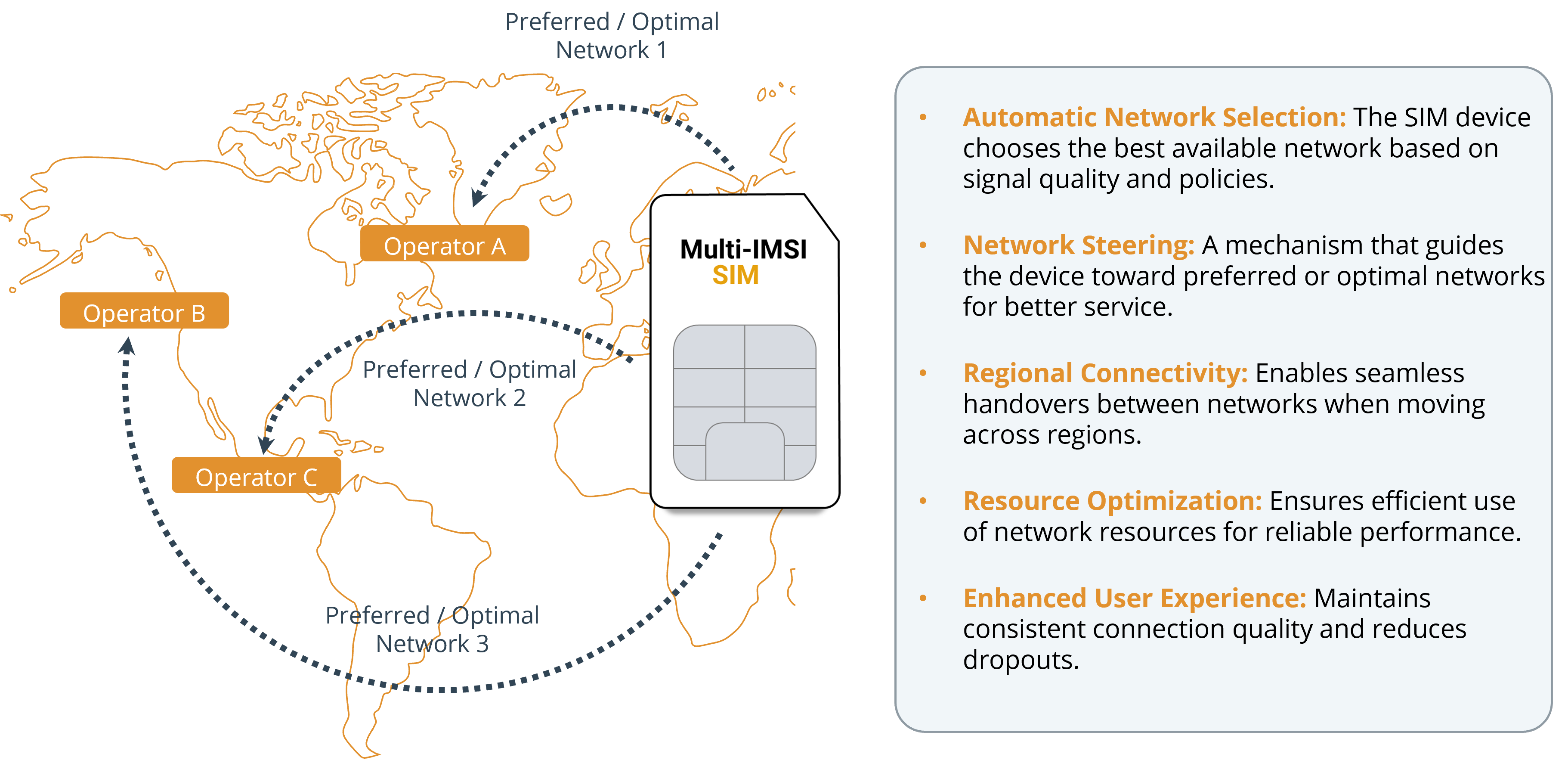
Steering, refers to how SIM-based IOT devices, connect to a network. The Steering mechanism directs a SIM card to connect to preferred networks to ensure reliable connectivity, and optimal resource utilization. In this context, a Steering Tree defines which networks are allowed and which are blocked for a given IoT device.
The basic concept of how steering management works is shown in this diagram.
Key Concepts
IoT deployments face distinct challenges compared to traditional mobile devices. IoT devices are often dispersed over large areas, operate with minimal power, and require consistent connectivity without user intervention. The challenges of IoT Steering Management compared to traditional mobile devices are described in this table.
| Term / Concept | Description |
|---|---|
| Network Steering | In cellular networks, "steering" refers to the mechanism by which a connectivity provider determines which network a device should connect to when it is roaming outside of its home network. By default, cellular devices connect to their "home" network—the network associated with the SIM card issuing mobile operator. When devices move to other regions, the provider guides them towards preferred roaming partners. This guidance is called "Network Steering" or "Steered Roaming." |
| IoT Steering Trees | A steering tree is an advanced form of steering used in IoT networks. It represents a set of predefined rules and conditions integrated into a Connectivity Management Platform (CMP) or the core network of a connectivity provider. These rules help guide IoT devices to the best available network, based on factors like cost, performance requirements, roaming agreements, and regulatory compliance. Devices with steering embedded make autonomous decisions about network selection, ensuring constant, optimized connectivity without manual intervention. This is crucial for large-scale IoT deployments that involve many devices operating in various environments. |
Steering Methods for IoT Networks
There are two primary methods for steering IoT devices within a cellular network.
| Type of Method | Description |
|---|---|
| SIM-Based Configuration |
A SIM card can be configured with preferred Public Land Mobile Networks (PLMNs). The advantage of this approach is that the SIM doesn't waste energy attempting to connect to undesirable networks, conserving battery life. However, if a preferred network is unavailable, the device may not connect to any network, which can be problematic for mission-critical devices like medical or security systems. |
| Core Network Steering | In this approach, the SIM is allowed to connect to any available network, but the core network controls approvals or rejections. This method offers more control but can lead to long connection attempts, draining battery life. It is ideal for scenarios where flexibility is essential, such as in complex IoT deployments across different regions. |
| Billing-based-Control | Network steering can also be managed through a real-time billing system, where connectivity is controlled based on connectivity rates, data quotas and usage. This method allows for precise cost control but is less efficient in terms of battery life and requires significant communication between the SIM and the core network. This method may result with a device connected to a network with no service and without the ability to move to another network. |
How It Works
Core Network Steering is a configuration maintained at the HLR/HSS level to define the roaming networks that are permitted for an International Mobile Subscriber Identity (IMSI). The primary aim is to establish a whitelist of PLMNs (Public Land Mobile Networks) that IMSIs associated with a specific HSS can connect to.
There are two types of supported network configurations:
- 2G and 3G Networks: Configurations support older network standards.
- 4G Networks: Configurations tailored to support 4G connectivity.
An overview of the floLIVE Steering Management solution is shown here.
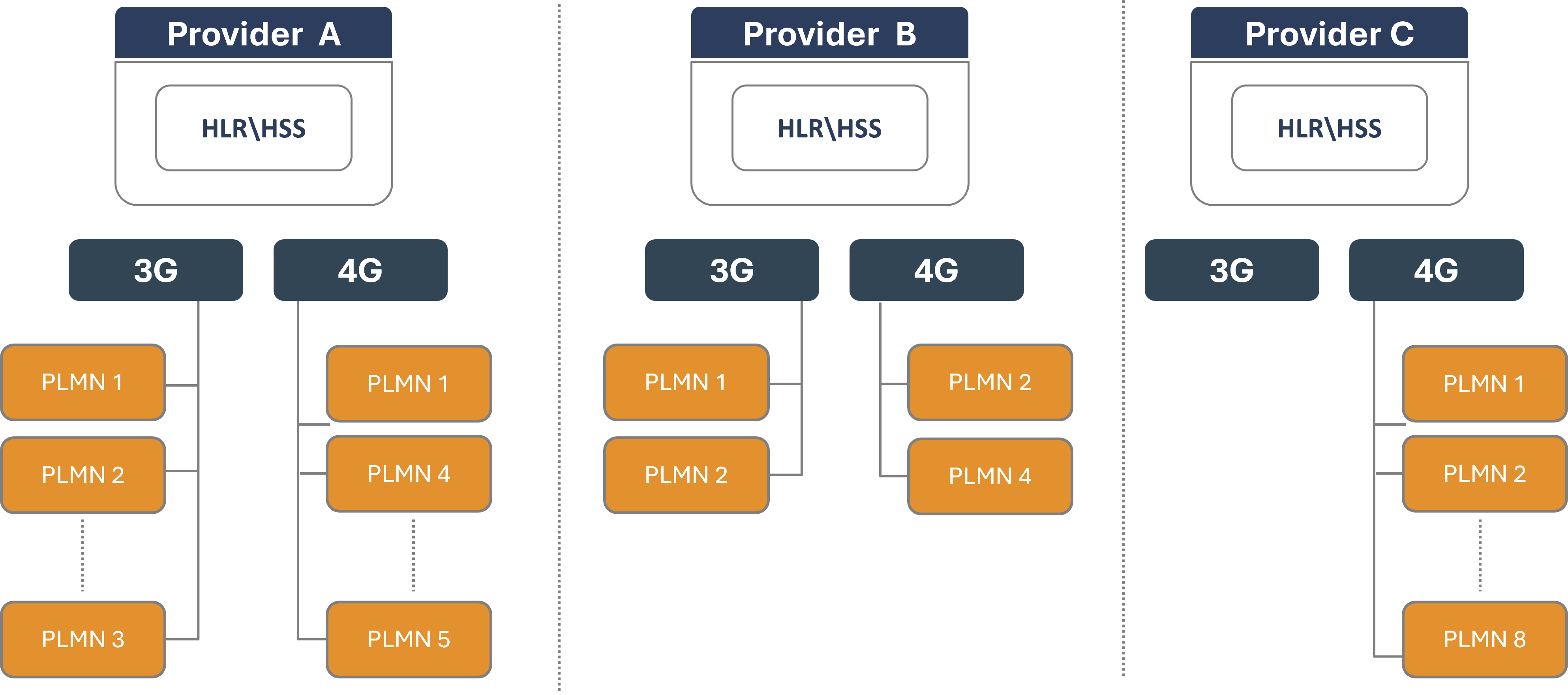
The basic concept is to create a “whitelist” mechanism that allows connections to be established only from specified MCC (Mobile Country Code) and MNC (Mobile Network Code). If an IMSI attempts to connect from a network that is not part of this whitelist, the connection will be denied.
EXAMPLE: A Communication Service Provider may want to allow service from only one specific network in the United Kingdom while forbidding all others. This particular network would be included in the configuration, while all other networks would be excluded.